
AI and the Brazilian Patent Office : redefining the role of the examiner

The Brazilian Patent and Trademark Office (BPTO) is facing pivotal transformation. As artificial intelligence (AI) tools become increasingly integrated into administrative and legal processes, the role of the examiner – historically rooted in technical and legal analysis – is evolving. Rather than replacing human professionals, AI is emerging as a partner, reshaping how intellectual property (IP) rights are examined and protected in Brazil.


The BPTO receives thousands of new filings every year across patents, trademarks, and industrial designs. Despite significant modernization efforts, the volume of cases still imposes a heavy workload on examiners. In this scenario, automation and machine learning appear as natural allies – capable of handling repetitive, time-consuming tasks so that human professionals can focus on the complex interpretative aspects of IP protection.


AI systems can be trained to search vast databases of prior rights and technical documents, accelerating tasks such as : (i) similarity searches for trademarks ; (ii) prior-art detection for patents, and (iii) classification of applications by subject matter or Nice classes.


Natural language processing and machine learning algorithms can assist in comparing documents, identifying relevant precedents, and even suggesting draft examination reports. This creates a new model of “augmented examiner“: a professional who supervises, interprets, and refines AI-generated insights rather than starting each analysis from scratch.


While AI can enhance efficiency, it cannot replicate human judgment. Patent and trademark examination involves the interpretation of legal nuances, market realities, and the specificities of language and consumer perception – dimensions where experience and critical thinking are essential.


The examiner of the future will need not only legal and technical expertise but also AI literacy : the ability to use, evaluate, and question algorithmic results responsibly.



Integrating AI into public administration brings several challenges: 

  1. data quality and transparency: reliable and well-structured databases are essential to train trustworthy models ;
  2. bias and fairness: AI must be constantly supervised to prevent reproducing discriminatory or inconsistent outcomes.
  3. Cultural adaptation: resistance to technological change within institutions is natural, and capacity-building programs are crucial.
  4. Technological infrastructure: implementing AI at scale requires investment, interoperability, and cybersecurity.


Addressing these factors will determine whether the BPTO can fully benefit from AI while maintaining the integrity of its examination process.


Far from being a threat, artificial intelligence offers an opportunity to position Brazil as a reference in IP modernization.


By investing in training, technology, and collaboration with academic and private partners, the BPTO can achieve greater efficiency and transparency, reducing backlogs and ensuring faster protection for innovators.


The future of IP examination is hybrid. AI can automate what is repetitive, but only humans can interpret, contextualize and decide. The examiner’s role will evolve, but its importance will remain.


For companies and creators, this transformation highlights the need for specialized legal guidance capable of navigating the intersection between technology and intellectual property. As innovation accelerates, understanding how these tools impact protection strategies becomes not only advantageous but essential.


Author: Marília de Oliveira Fogaça, Thaís de Kássia R. Almeida Penteado and Cesar Peduti Filho, Peduti Advogados.

Source: O futuro do trabalho no INPI: o examinador na era da inteligência artificial + https://www.jota.info/opiniao-e-analise/artigos/o-futuro-do-trabalho-no-inpi-o-examinador-na-era-da-inteligencia-artificial 


“If you want to learn more about this topic, contact the author or the managing partner, Dr. Cesar Peduti Filho.”

“Se quiser saber mais sobre este tema, contate o autor ou o Dr. Cesar Peduti Filho.”

Public hearing at Brazil’s Supreme Court (STF) explores contractual security and artist remuneration in the digital age

The public hearing held by Brazil’s Supreme Court (STF) examined how decades-old copyright contracts should apply to today’s digital environment. The case, involving songs by Roberto Carlos and Erasmo Carlos, questions whether agreements from the 1960s–1980s—signed long before streaming—still ensure fair remuneration for artists.


At the heart of the discussion lies a conflict between legal certainty and equitable compensation. Publishers argue that revisiting old contracts threatens contractual stability, while artists contend that these deals never envisioned the current modes of exploitation and thus result in unfair payments.


The STF’s eventual ruling could reshape the Brazilian music industry. A decision favoring renegotiation may reopen thousands of legacy contracts, while reaffirming contract validity could prompt lawmakers to introduce specific rules for digital-era royalties.


Beyond this individual dispute, the case highlights how Brazil’s legal framework must adapt to new technologies. The Court’s stance will set an important precedent for balancing the protection of agreements with ensuring that creators share fairly in the value generated by streaming platforms.


Author: Enzo Toyoda Coppola, Thaís de Kássia R. Almeida Penteado and Cesar Peduti Filho, Peduti Advogados.

Source: Direitos autorais: audiência no STF debate segurança dos contratos e remuneração dos artistashttps://www.jota.info/stf/do-supremo/direitos-autorais-audiencia-no-stf-debate-seguranca-dos-contratos-e-remuneracao-dos-artistas 

STF faz audiência sobre direitos autorais na internet com advogados de Roberto Carlos, Erasmo e Gil – https://www.terra.com.br/diversao/stf-faz-audiencia-sobre-direitos-autorais-na-internet-com-advogados-de-roberto-carlos-erasmo-e-gil,4f163393a6152f89bccbf4bdb2fae495zlzbp0wa.html

Direitos autorais: audiência no STF debate segurança dos contratos e remuneração dos artistas – https://advogado-e.com.br/2025/10/28/direitos-autorais-audiencia-no-stf-debate-seguranca-dos-contratos-e-remuneracao-dos-artistas


“If you want to learn more about this topic, contact the author or the managing partner, Dr. Cesar Peduti Filho.”

“Se quiser saber mais sobre este tema, contate o autor ou o Dr. Cesar Peduti Filho.”

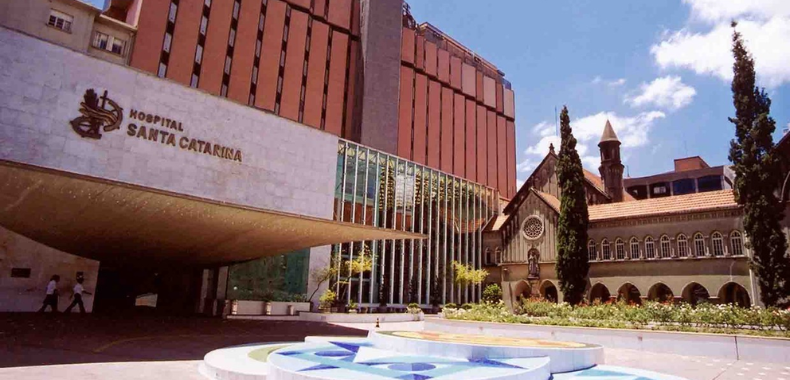
São Paulo Court of Justice rejects unfair competition lawsuit filed by owner of Hospital Santa Catarina

In a recent decision, the São Paulo Court of Justice (TJSP) dismissed a lawsuit brought by the owner of Hospital Santa Catarina in São Paulo against another healthcare institution operating under a similar name in the state of Santa Catarina. 


Hospital Santa Catarina is a well-established medical facility in São Paulo, with a strong reputation built over the last decades for its services. The plaintiff alleged that the defendant was engaging in unfair competition by using the name “Hospital Santa Catarina,”.


Specifically, it was claimed that the similarity between the names could confuse consumers, dilute the plaintiff’s brand, and unfairly capitalize on its goodwill. The plaintiff sought damages and an injunction to prevent the defendant from using the name, arguing that this constituted a violation under the Brazilian Industrial Property Law and principles of unfair competition outlined in the country’s Civil Code.


The defendant countered that the hospitals operated in geographically distinct regions with no overlapping patient bases or marketing efforts. They also emphasized that the name “Santa Catarina” holds cultural and historical significance, particularly because the hospital is based in the homonymous state in the south of Brazil, named after Saint Catherine of Alexandria, and that their use of the name was not intended to mislead or exploit the plaintiff’s reputation.


Furthermore, the southern hospital pointed out that the plaintiff’s trademark registration was limited in scope and did not extend nationwide exclusivity, especially because of the descriptive nature of the name in that given context, that is, when the hospital’s name is also a state’s name.


After careful review, the court sided with the defendant, rejecting the unfair competition claim. The decision was centered on the lack of evidence showing intentional parasitism or actual consumer confusion. Judges noted that the hospitals’ services were confined to their respective locations, mitigating the risk of market overlap. 


This rationale exemplifies the application of the trademark law by the courts in Brazil, ensuring that intellectual property rights are enforced without stifling legitimate business activities. Specially for investors, the outcome marks Brazil as a jurisdiction where trademarks are fairly protected, encouraging innovation and deterring frivolous litigation. Such stability is crucial for fostering a secure environment and welcoming new players into the Brazilian market.


Author: Carlos Roberto Parra, Thaís de Kássia R. Almeida Penteado and Cesar Peduti Filho, Peduti Advogados.

Source: TJSP rejeita ação por concorrência desleal movida por dona do Hospital Santa Catarina.

https://www.jota.info/justica/tjsp-rejeita-acao-por-concorrencia-desleal-movida-por-dona-do-hospital-santa-catarina 


“If you want to learn more about this topic, contact the author or the managing partner, Dr. Cesar Peduti Filho.”