

In September 2026, the Brazilian National Institute of Industrial Property (INPI) recognized the Geographical Indication (Indicação Geográfica) for Tiquira do Maranhão as an Indication of Source (Indicação de Procedência). Tiquira is a distilled alcoholic beverage made from fermented cassava and has a longstanding tradition in the State of Maranhão. The geographical area covered by the Geographical Indication comprises the municipalities of Santo Amaro do Maranhão, Barreirinhas, Urbano Santos, Santana do Maranhão, and Santa Quitéria do Maranhão.
The recognition draws attention not only to the cultural and economic relevance of the beverage, but also to a fundamental question in Intellectual Property Law: when a Geographical Indication is recognized, what exactly does it protect?
The Categories of Geographical Indications
In Brazil, Law No. 9,279/1996 (Industrial Property Law – LPI) provides, in Article 176, that Geographical Indications comprise two categories: Indication of Source (Indicação de Procedência) and Appellation of Origin (Denominação de Origem).
Indication of Source, established under Article 177 of the LPI, refers to a geographical name that has become known as a center for the extraction, production, or manufacture of a particular product, or for the provision of a particular service. In this case, the relevant element is the recognition of the territory as a place associated with the production of the relevant product or service.
Appellation of Origin, in turn, as defined in Article 178, requires a more specific link between the product or service and the territory. Its qualities or characteristics must result exclusively or essentially from the geographical environment, including both natural and human factors.
Accordingly, the two categories differ primarily in the nature of the relationship established between the product or service and the geographical territory. While an Indication of Source is based on the recognition of a particular area in connection with the production of a particular product or service, an Appellation of Origin requires the geographical environment to contribute exclusively or essentially to its qualities or characteristics.
The Scope of Protection Conferred by a Geographical Indication
The protection conferred by a Geographical Indication is based on the legally recognized connection between the geographical name, the product or service, and the corresponding territory.
In this regard, Article 182 of the LPI provides that the use of a Geographical Indication is restricted to producers and service providers established within the relevant geographical area. In the case of Appellations of Origin, the applicable quality requirements must also be satisfied.
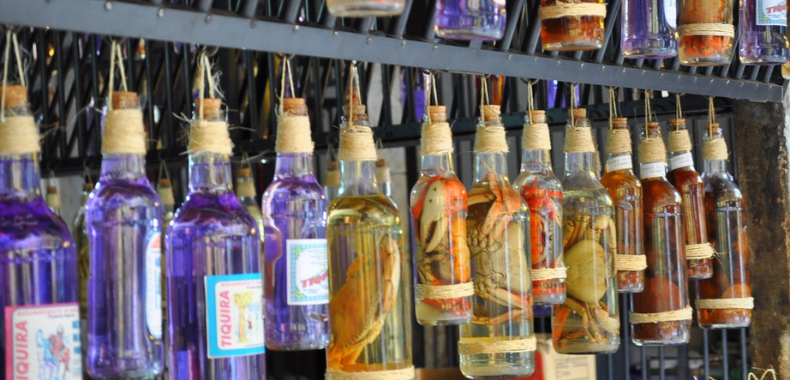
Protection, therefore, involves more than the geographical name itself. The use of a Geographical Indication in connection with a product or service is subject to the requirements established for the relevant indication. Depending on the specific Geographical Indication, these requirements may concern product characteristics, production methods, quality standards, and control mechanisms.
Such requirements are set out in the Technical Specifications Booklet (Caderno de Especificações Técnicas), which plays a central role in defining the conditions governing the use of each Geographical Indication.
In the case of Tiquira do Maranhão, the Technical Specifications Booklet establishes requirements concerning, among other matters, the stages of production, physicochemical standards, and control mechanisms. It also defines the geographical area and sets out the conditions governing the use of the Indication of Source.
Thus, although a Geographical Indication is directly linked to geographical origin, the conditions governing its use may encompass a broader set of requirements concerning the product and its production.
The Reach of Protection
By defining who may use the indication and under what conditions, the Geographical Indication system establishes parameters for the use of a geographical name in connection with a particular product or service.
This differs from the function generally performed by a trademark. While a trademark is ordinarily used to identify goods or services as originating from a particular commercial source, a Geographical Indication is linked to a geographical origin and may be used by multiple producers or service providers who satisfy the applicable requirements.
In the case of Tiquira, for instance, recognition does not confer exclusive rights over the designation on a single producer. Rather, use of the Indication of Source is linked to the defined geographical area and to compliance with the applicable production requirements.
This collective dimension may be relevant in cases involving products whose reputation has developed over time within a particular territory. In such circumstances, the Geographical Indication framework may provide a mechanism through which qualified producers can use the geographical name in accordance with the requirements established for the indication.
The Role of Geographical Indications
Geographical Indications therefore occupy a distinct position within the intellectual property system. Their legal framework incorporates elements relating to geographical origin, reputation, product characteristics, and production requirements, with the specific scope of protection depending on the characteristics and specifications applicable to each indication.
The recognition of Tiquira do Maranhão illustrates this framework. In addition to recognizing the geographical name in connection with the beverage, the Indication of Source establishes the geographical boundaries and conditions governing its use.
From this perspective, the protection afforded by a Geographical Indication is not limited to identifying a geographical location. It also establishes the legal conditions under which a geographical name may be used in connection with a particular product or service.
The scope of that protection will therefore depend on the category of Geographical Indication involved, the applicable geographical area, and the requirements established in the corresponding Technical Specifications Booklet. These elements determine the circumstances in which the geographical name may be used and the relationship that the legal framework recognizes between the territory and the relevant product or service.
—
Author: Sabrina Popp da Silva, Thaís de Kassia R. Almeida Penteado, and Cesar Peduti Filho, Peduti Advogados.
Source:
Tiquira do Maranhão ganha selo de Indicação Geográfica; entenda o que muda – https://g1.globo.com/ma/maranhao/cultura/noticia/2026/09/25/tiquira-do-maranhao-ganha-selo-de-indicacao-geografica-entenda-o-que-muda.ghtml
INPI reconhece a Indicação Geográfica para a bebida tiquira do Maranhão – https://www.gov.br/inpi/pt-br/central-de-conteudo/noticias/inpi-reconhece-a-indicacao-geografica-para-a-bebida-tiquira-do-maranhao
—
“If you want to learn more about this topic, contact the author or the managing partner, Dr. Cesar Peduti Filho.”