

Yakult v. Isinho: Brazilian Court Rules Against Japanese Brand in Trademark Infringement and Unfair Competition Dispute

After four years of litigation between Yakult S.A. Indústria e Comércio and Kabushiki Kaisha Yakult Honsha against Laticínio Belo Vale Ltda., the Court of Justice of the State of Paraíba ultimately ruled against the Japanese multinational. The decision allows Laticínio Belo Vale Ltda to continue using its fermented milk packaging, despite the alleged similarity to the packaging of the fermented milk identified by the mark YAKULT. The decision highlights the limits of trademark and trade dress protection under Brazilian law.


The dispute began when Yakult, which holds it’s the highly renowned three-dimensional packaging trademark YAKULT, filed a lawsuit against Laticínio Belo Vale, the manufacturer of the fermented milk product identified by the composite mark, a competing brand. Yakult claimed that the packaging of the Isinho product infringes its trademark rights and constitutes unfair competition.


Laticínio Belo Vale argued, in its turn, that the packaging shape had become widespread and is now considered a market standard, in addition to serving an ergonomic function, which prevents Yakult from claiming exclusive rights over the package design.
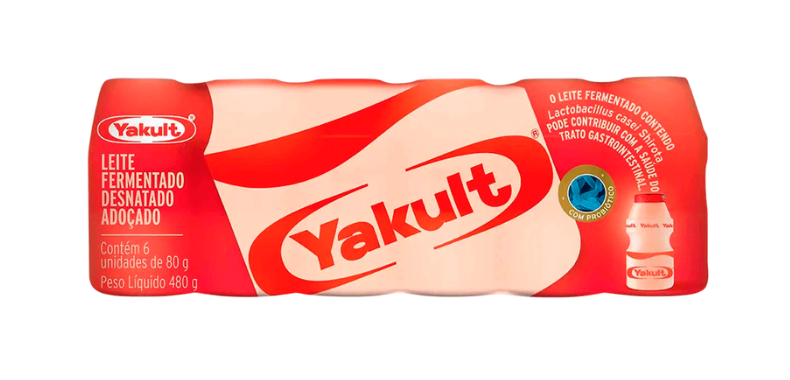


The decisive factor in the judge’s ruling was the technical expert report, which showed that, although the packaging shapes are similar, the form is indeed a market standard and serves a functional purpose. Furthermore, according to the referred report, the images and colors on the labels differ, reducing the likelihood of consumer confusion. The court also noted that Yakult only began legal actions against competitors over this packaging in 2017, even though the brand has been in the market for more than 50 years.


Therefore, the judge ruled that Yakult’s claims were unfounded. Despite holding a highly renowned mark, Yakult’s failure to enforce its rights over decades resulted in a significant disadvantage and weakened its position. As the magistrate stated: “Although the high renown status reinforces distinctiveness, prolonged inaction by the rights holder in preventing similar uses can, in fact, lead to the dilution of the mark.”


This finding, along with the absence of consumer confusion, not only secured a relevant judicial victory for Laticínio Belo Vale, but may also set a precedent for similar actions Yakult may wish to pursue. In the long term, it could even jeopardize the High Renown status of Yakult’s mark with the Brazilian Trademark Office (INPI). The case underscores the importance of timely and diligent action by trademark owners to safeguard their intangible assets.


Advogado(a) autor(a) do comentário: Fernanda Carmagnani Rodrigues, Lígia Ferreira Marcondes Rocha e Cesar Peduti Filho, Peduti Advogados

Fonte: Juiz nega pedido da Yakult para que leite fermentado Isinho troque de embalagemhttps://www.jota.info/justica/juiz-nega-pedido-da-yakult-para-que-leite-fermentado-isinho-troque-de-embalagem  

Na briga das marcas, Yakult leva a pior na luta contra laticínio paraibanohttps://movimentoeconomico.com.br/empresas/2025/11/25/na-briga-das-marcas-yakult-leva-a-pior-na-luta-contra-laticinio-paraibano/ 

Inteiro teor da sentença do processo nº 0817669-21.2021.8.15.2001 – Site TJPB


Se quiser saber mais sobre este tema, contate o autor ou o Dr. Cesar Peduti Filho.

Should you wish to learn more about this topic, please feel free to contact the authors or our managing partner, Dr. Cesar Peduti Filho.


Pharmaceutical industry giants engage in a multi-million dollar lawsuit in Brazil

Brazil is currently the stage of a lawsuit filed by Sanofi Medley against Cimed, two major companies in the pharmaceutical industry, on the grounds of unfair competition and trade dress infringement involving medications marketed by the defendant. The case is pending before the 1st Business Court and Arbitration-Related Disputes of the Central Civil Court of São Paulo.


According to the allegations brought by Medley, the medications commercialized under the defendant’s marks Alegormine, an anti-allergy drug, and Nevralgex, a muscle relaxant, allegedly infringe the trade dress of its products Allegra and Dorflex, which are likewise intended for the relief of allergy symptoms and muscle pain. 


It is important to note that the Industrial Property Law does not expressly mention trade dress; however, the legislation classifies certain acts of unfair competition as liable for compensation, which leads to the understanding that trade dress infringement is protected by law, according to Article 209 of the mentioned Law:  


Art. 209. The injured party reserves the right to claim damages in compensation for losses caused by acts of infringement of industrial property rights and acts of unfair competition not provided for in this Law, which tend to damage the reputation or business of others, to create confusion between commercial or industrial establishments or service providers, or between products and services placed on the market.


In the case at hand, Medley’s allegations revolve around the fact that its medication Allegra features a purple packaging, whereas Cimed’s Alergomine is likewise commercialized in purple packaging. In the same way, the Plaintiff claims that its other medication intended for muscle pain relief, identified by the mark Dorflex, has blister packaging in orange, while the defendant’s competing product Nevralgex also features blister packaging in the same color.


The defendant, Cimed, disagrees with the allegations presented and states that it “uses colors consistent with trends in the therapeutic category” and that the matter had already been examined by CONAR (National Council for Advertising Self-Regulation) in 2024, with the Sixth Chamber of that body ruling that there is no possible confusion for consumers, unless they are extremely inattentive. Despite this, CONAR recommended changing the packaging to avoid any possibility of confusion. 


Disputes of this nature are particularly delicate and require a careful technical analysis to determine whether there has indeed occurred an act of unfair competition capable of causing consumer confusion.


In order to effectively mitigate any risk of trade dress infringement, it is advisable to conduct a  common law search (which includes trademark search), by previously assessing all potential legal risks prior to the launch of any product, including a review of its overall visual elements (identity and packaging), so as to ensure that there is no infringement of another product’s visual identity that could cause consumer confusion and thereby constitute acts of unfair competition.


Lastly, a common law search should be conducted with the assistance of specialized professionals, so as to avoid any harm to those seeking to market and promote their products and services.


Author: Daniela Russo, Lígia Ferreira Marcondes Rocha and Cesar Peduti Filho, Peduti Advogados.

Source: https://timesbrasil.com.br/empresas-e-negocios/medley-x-cimed-a-milionaria-batalha-judicial-pelo-visual-dos-remedios-allegra-e-dorflex/


“For further information on this topic, please contact the authors or the managing partner, Dr. Cesar Peduti Filho.”

Kickoff for 2027: how Provisional Measure 1,335/2026 strengthens the IP playing field

As Brazil advances its preparations to host the FIFA Women’s World Cup 2027, the legal framework required to support such a monumental global event is rapidly taking shape. On January 22, 2026, the Federal Government published Provisional Measure (MP) No. 1,335, which establishes special measures for the protection of intellectual property, media coverage, and marketing rights related to the tournament.


For rights holders, sponsors, and the broader advertising market, this legislation represents a welcome development that signals Brazil’s commitment to international standards of enforcement and provides a clear, stable roadmap for commercial activities leading up to the games.


One of the most significant aspects of the new measure is the specific directive given to the Brazilian Patent and Trademark Office (BPTO) regarding the event’s trademarks. The legislation facilitates the recognition of “High Renown” status for the tournament’s key symbols, effectively expanding protection across all classes of goods and services, rather than just those directly related to sports. 


This distinct legal status significantly reduces the administrative burden on the organizers and provides the BPTO with robust tools to summarily reject bad-faith filings by third parties attempting to capitalize on the event’s publicity. This efficiency is a positive signal for foreign investors and local partners alike, demonstrating a streamlined approach to asset protection.


Beyond the registration of marks, the Provisional Measure refines the legal concepts surrounding illicit advertising, specifically targeting ambush marketing. This is a crucial evolution for protecting the exclusivity promised to official sponsors who invest heavily in the event. The text carefully delineates between ambush marketing by association, where non-sponsors use imagery or terms to suggest an official link, and ambush marketing by intrusion, which involves unauthorized visibility at the venues.


By establishing these boundaries clearly in the law well in advance of the opening match, the MP provides much-needed legal certainty. Marketing teams can now design creative campaigns with a precise understanding of the compliance landscape, while official sponsors can rest assured that their commercial territory is shielded from parasitic competition.


The measure also addresses the complexities of the modern media landscape by establishing exclusive rights for capturing and transmitting images and sounds of the matches. However, the text strikes a sensible and necessary balance by explicitly allowing for the capture of content for journalistic purposes. This provision ensures that while commercial exploitation is strictly reserved for rights holders, the freedom of the press and the public’s right to information remain protected. 


Ultimately, MP 1,335/2026 should be viewed through the lens of legal security. Hosting a global event requires a stable environment where contracts are honored and intellectual property is rigorously respected. By enacting this measure more than a year before the tournament, Brazil is avoiding the uncertainty that often plagues host nations in the final months of preparation. 


Author: Carlos Roberto Parra, Thaís de Kássia R. Almeida Penteado and Cesar Peduti Filho, Peduti Advogados.

Source: https://www2.camara.leg.br/legin/fed/medpro/2026/medidaprovisoria-1335-22-janeiro-2026-798671-norma-pe.html


“If you want to learn more about this topic, contact the author or the managing partner, Dr. Cesar Peduti Filho.”